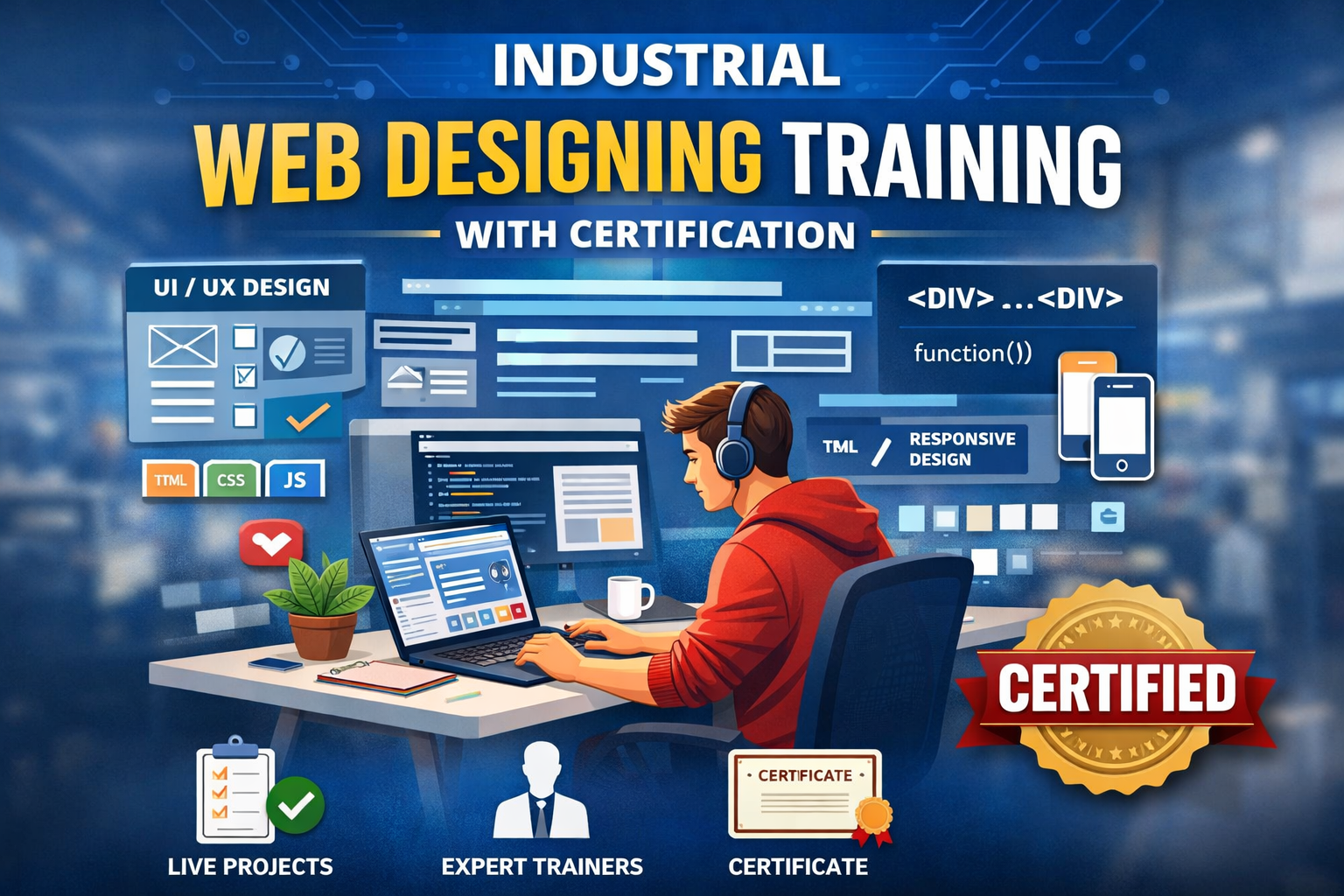
Industrial Web Designing Training with Certification
Introduction
In today’s digital-driven world, websites play a crucial role in shaping the identity and success of businesses. From startups to global enterprises, every organization depends on well-designed, responsive, and user-friendly websites to connect with customers and grow their presence. This has created a massive demand for skilled professionals who can design and develop high-quality websites. Enrolling in an industrial web designing training with certification is one of the best ways to enter this fast-growing and rewarding field.
An industry oriented web designing training program is specifically designed to meet current market demands. Unlike basic courses, industrial training focuses on real-world applications, practical exposure, and hands-on experience. It ensures that students are not only familiar with theoretical concepts but also capable of applying their skills in real work environments. This makes learners job-ready from day one.
A major advantage of joining a web designing course with certificate is the credibility it adds to your professional profile. Certification acts as proof of your skills and knowledge, making it easier for employers to trust your capabilities. Whether you are a student, job seeker, or working professional, a professional web designing certification course can significantly enhance your career prospects.
Modern web designing is not limited to just creating visually appealing layouts. It involves understanding user behavior, optimizing performance, and ensuring compatibility across devices. A responsive web design certification course trains students to build websites that adapt seamlessly to different screen sizes, including mobiles, tablets, and desktops. This skill is essential in today’s mobile-first world.
In addition, a certified web designing training program covers essential coding languages such as HTML, CSS, and JavaScript. These technologies form the backbone of web development and are necessary for creating dynamic and interactive websites. Students also learn advanced tools and frameworks that help them build modern web applications efficiently.
Another important aspect of industrial training is practical exposure. A web designing training with live projects allows students to work on real-time assignments, helping them understand client requirements, deadlines, and project management. This hands-on experience is invaluable in building confidence and improving problem-solving skills.
Many learners also prefer an industrial web design course with placement, as it provides career support and job opportunities after course completion. Placement assistance helps students connect with companies, attend interviews, and secure their first job in the industry.
Choosing a reliable web designing certification training institute ensures that you receive quality education, expert guidance, and access to the latest tools and technologies. Institutes offering an advanced web design course with certificate focus on both design and development aspects, preparing students for diverse roles in the industry.
Overall, an industrial web designing training with certification is a complete package that combines technical knowledge, practical skills, and career support, making it an ideal choice for anyone looking to build a successful career in web designing.
Modules Covered in Industrial Web Designing Training
An industrial web designing training with certification program is structured to provide comprehensive knowledge of web design and development. The modules are carefully designed to ensure students gain both foundational and advanced skills.
1. Fundamentals of Web Designing
This module introduces:
- Basics of web technologies
- Understanding website structure
- Design principles and layout techniques
It builds a strong foundation for advanced learning.
2. HTML (HyperText Markup Language)
As part of the certified web designing training program, students learn:
- HTML tags and elements
- Forms and validation
- Multimedia integration
- Semantic HTML
This module focuses on structuring web pages.
3. CSS (Cascading Style Sheets)
This module includes:
- Styling techniques
- Flexbox and Grid systems
- Animations and transitions
- Responsive design
It is a key component of the responsive web design certification course.
4. JavaScript
Students learn:
- Core JavaScript concepts
- DOM manipulation
- Event handling
- Interactive website features
This module adds functionality to websites.
5. Responsive Web Design
This module focuses on:
- Mobile-first approach
- Media queries
- Cross-device compatibility
- Bootstrap framework
It ensures websites perform well on all devices.
6. UI/UX Design
A crucial part of the professional web designing certification course, this module includes:
- User interface design
- User experience strategies
- Wireframing and prototyping
- Tools like Figma and Adobe XD
7. Front-End Development
This module includes:
- Advanced JavaScript frameworks
- Component-based design
- Performance optimization
8. Graphic Designing for Web
Students learn:
- Color theory
- Typography
- Image editing tools
- Visual content creation
9. Content Management Systems (CMS)
This module covers:
- WordPress development
- Theme customization
- Plugin integration
10. SEO Basics
This module includes:
- On-page SEO
- Keyword optimization
- Website performance improvement
11. Live Projects and Practical Training
A major highlight of web designing training with live projects:
- Real-time project work
- Client-based assignments
- Portfolio development
12. Interview Preparation and Placement Support
Included in an industrial web design course with placement:
- Resume building
- Mock interviews
- Job placement assistance
Benefits of Industrial Web Designing Training with Certification
An industrial web designing training program offers a wide range of benefits that help students build a strong and successful career in the digital industry. Below is a detailed explanation of these advantages:
1. Industry-Relevant Skills
Students gain practical knowledge that matches current industry requirements. Instead of focusing only on theory, they learn tools, technologies, and techniques that are actually used in real projects. This makes them job-ready and confident in handling professional work environments.
2. Certification Advantage
A web designing course with certificate adds credibility to your profile. It acts as proof of your skills and knowledge, making it easier for employers to trust your abilities. Certification also increases your chances of getting shortlisted during job applications.
3. Hands-On Experience
Through web designing training with live projects, students gain real-world experience. They work on actual assignments, understand client requirements, and learn how to manage deadlines. This practical exposure helps bridge the gap between learning and working.
4. High Demand Career
Web designing is one of the most in-demand professions globally. With businesses moving online, the need for skilled designers continues to grow. This ensures job security and long-term career stability.
5. Job Opportunities
After completing a certified web designing training program, students can explore multiple roles such as Web Designer, UI/UX Designer, Front-End Developer, and Web Developer. These roles are available in IT companies, startups, and digital agencies, offering diverse career paths.
6. Freelancing Opportunities
Web designing also provides the flexibility to work independently. Students can take freelance projects from clients around the world and earn from the comfort of their homes. This opens up additional income opportunities.
7. Placement Support
An industrial web design course with placement provides career assistance to students. Institutes help in resume building, interview preparation, and connecting students with job opportunities, making it easier to start a career quickly.
8. Creative and Technical Growth
This field allows individuals to develop both creative and technical skills. Students learn design principles along with coding, making them versatile professionals capable of handling multiple aspects of web development.
9. Portfolio Development
Working on live projects helps students build a strong portfolio. A well-designed portfolio showcases their skills and work to potential employers, increasing their chances of getting hired.
10. Updated Knowledge
Courses are regularly updated to match the latest industry trends and technologies. This ensures that students stay relevant and competitive in the fast-changing digital world.
11. Flexible Career Options
Web designing offers flexibility in career choices. Students can work in companies, join startups, or choose freelancing. This flexibility allows them to select a path that suits their lifestyle and goals.
12. Entrepreneurial Opportunities
After gaining experience, students can start their own web design business or agency. This opens the door to entrepreneurship and financial independence.
13. Continuous Learning
Web designing is an evolving field where new tools and trends emerge regularly. This provides continuous learning opportunities and helps professionals grow over time.
14. Global Career Scope
Web designing skills are in demand worldwide. Students can work for international companies or clients, giving them exposure to global markets and higher earning potential.
15. Better Salary Packages
Certified professionals often receive higher salaries due to their expertise and practical knowledge. As skills and experience increase, earning potential also grows significantly.
Conclusion
An industrial web designing training with certification is a powerful step toward building a successful career in the digital world. With the increasing demand for skilled professionals, enrolling in a web designing certification training institute can help you gain the knowledge, skills, and confidence needed to excel.
Programs like advanced web design course with certificate, responsive web design certification course, and industry oriented web designing training ensure that students are fully prepared for real-world challenges. The inclusion of web designing training with live projects and placement support further enhances career opportunities.
If you are passionate about creativity, technology, and innovation, then choosing an industrial web design course with placement is the perfect way to start your journey and achieve long-term success in the web designing industry.
Why Choose TechCadd for Industrial Web Designing Training with Certification
Introduction
In the rapidly evolving digital landscape, businesses are increasingly dependent on powerful, user-friendly, and responsive websites to establish their online presence. As a result, the demand for skilled web designers and developers has grown significantly across industries. For individuals aiming to build a successful career in this field, enrolling in an industrial web designing training with certification is a smart and future-oriented decision. Among the many institutes offering such programs, TechCadd has emerged as a trusted name and a leading web designing certification training institute known for its industry-focused approach and practical training.
TechCadd is committed to delivering high-quality education through its industry oriented web designing training programs. Unlike traditional learning methods, TechCadd focuses on real-world applications, hands-on experience, and up-to-date technologies. This ensures that students are not only theoretically sound but also capable of handling real industry challenges confidently.
One of the major advantages of choosing TechCadd is its comprehensive web designing course with certificate, which adds significant value to a student’s professional profile. Certification acts as proof of expertise and increases employability, making it easier for students to secure jobs in competitive markets. TechCadd’s professional web designing certification course is designed to meet industry standards and expectations, ensuring that learners are fully prepared for job roles.
The institute also offers a certified web designing training program that covers both design and development aspects in detail. From basic concepts to advanced techniques, the course structure is carefully designed to provide complete knowledge. Students also benefit from a responsive web design certification course, which is essential in today’s mobile-driven world where websites must perform seamlessly across different devices.
Another key feature that makes TechCadd stand out is its focus on practical exposure. Through web designing training with live projects, students get the opportunity to work on real-time assignments, helping them understand how projects are handled in professional environments. This hands-on experience is crucial in building confidence and developing problem-solving skills.
TechCadd also provides an industrial web design course with placement, ensuring that students receive proper career guidance and job assistance after completing their training. Placement support includes resume building, interview preparation, and direct connections with hiring companies, making the transition from learning to employment smooth and efficient.
Moreover, the institute offers an advanced web design course with certificate, which includes modern tools, frameworks, and technologies used in the industry. This helps students stay ahead in the competitive market and adapt to the latest trends.
Overall, TechCadd provides a complete learning experience through its industrial web designing training with certification, combining technical expertise, practical knowledge, and career support. It is an ideal choice for anyone looking to build a strong and successful career in web designing.
Modules Covered at TechCadd
TechCadd’s industrial web designing training with certification is structured to provide in-depth knowledge of web designing and development. The modules are designed to ensure a perfect balance between theory and practical learning.
1. Fundamentals of Web Designing
This module introduces students to:
- Basics of web technologies
- Understanding website structures
- Design principles and layout techniques
It builds a strong foundation for advanced topics.
2. HTML (HyperText Markup Language)
As part of the certified web designing training program, students learn:
- HTML tags and elements
- Forms and input fields
- Multimedia integration
- Semantic HTML
3. CSS (Cascading Style Sheets)
This module covers:
- Styling techniques
- Flexbox and Grid systems
- Animations and transitions
- Responsive design
It is an essential part of the responsive web design certification course.
4. JavaScript
Students gain knowledge of:
- Core JavaScript concepts
- DOM manipulation
- Event handling
- Interactive features
5. Responsive Web Design
This module focuses on:
- Mobile-first design approach
- Media queries
- Cross-device compatibility
- Bootstrap framework
6. UI/UX Design
As part of the professional web designing certification course, students learn:
- User interface design
- User experience strategies
- Wireframing and prototyping
- Tools like Figma and Adobe XD
7. Front-End Development
Included in the advanced web design course with certificate, this module covers:
- Advanced JavaScript frameworks
- Component-based development
- Performance optimization
8. Graphic Designing for Web
Students learn:
- Color theory
- Typography
- Image editing tools
- Visual content creation
9. Content Management Systems (CMS)
This module includes:
- WordPress development
- Theme customization
- Plugin integration
10. SEO Fundamentals
Students learn:
- On-page SEO techniques
- Keyword optimization
- Website performance improvement
11. Live Projects and Practical Training
A major highlight of web designing training with live projects:
- Real-time project work
- Client-based assignments
- Portfolio development
12. Interview Preparation and Placement Support
As part of the industrial web design course with placement, TechCadd provides:
- Resume building
- Mock interviews
- Placement assistance
Benefits of Choosing TechCadd
Choosing TechCadd for an industrial web designing training with certification offers numerous benefits that help students achieve career success.
1. Industry-Focused Training
TechCadd provides industry oriented web designing training that aligns with current market demands. Instead of just theoretical knowledge, students are exposed to practical tools, real-time workflows, and project-based learning. This ensures that learners understand how the industry operates and are ready to handle real challenges in professional environments.
2. Certification Advantage
A web designing course with certificate adds significant value to a student’s profile. It serves as proof of your skills and knowledge, helping you stand out in competitive job markets. Employers often prefer certified candidates, making it easier to secure interviews and job opportunities.
3. Hands-On Experience
Through web designing training with live projects, students gain valuable real-world experience. They work on actual assignments, understand client requirements, and learn how to meet deadlines. This hands-on approach builds confidence and prepares students for real job scenarios.
4. Placement Support
The industrial web design course with placement ensures that students receive complete career assistance. TechCadd helps with resume building, interview preparation, and job placement opportunities. This support system makes the transition from learning to employment smooth and efficient.
5. Expert Trainers
Students at TechCadd are guided by experienced trainers who have strong industry backgrounds. Their practical knowledge and real-life insights help students understand complex concepts easily. Learning from professionals also gives students exposure to industry standards and best practices.
6. Updated Curriculum
The curriculum is regularly updated to keep pace with the latest technologies and industry trends. This ensures that students are learning modern tools and techniques that are relevant in today’s digital world, making them more competitive in the job market.
7. Career Opportunities
After completing the certified web designing training program, students can explore various career paths such as Web Designer, UI/UX Designer, Front-End Developer, and Web Developer. These roles are highly востребованы in IT companies, startups, and digital agencies, offering long-term growth and stability.
8. Freelancing Opportunities
Web designing also opens doors to freelancing. Students can work independently and take projects from clients across the globe. This not only provides flexibility but also allows them to earn additional income and gain international exposure.
9. Portfolio Development
Live projects help students create a strong and impressive portfolio. A well-designed portfolio showcases skills, creativity, and experience, making it easier to attract employers and clients. It acts as a powerful tool during job interviews.
10. Creative and Technical Growth
Web designing is a perfect blend of creativity and technology. Students learn design principles along with coding skills, allowing them to build visually appealing and functional websites. This dual skill set makes them versatile professionals.
11. Flexible Learning Options
TechCadd offers flexible learning schedules to suit both students and working professionals. Whether you prefer weekday or weekend classes, the institute ensures that learning is convenient and accessible for everyone.
12. Entrepreneurial Opportunities
With the right skills and experience, students can start their own web design business or agency. This opens up opportunities for entrepreneurship and self-employment, giving individuals the freedom to work on their own terms.
13. Continuous Learning
Web designing is a constantly evolving field, and TechCadd encourages continuous learning. Students are motivated to stay updated with new tools, frameworks, and design trends, ensuring long-term career growth.
14. Global Career Scope
The demand for web designers is not limited to one region. Skills learned through this training are in demand worldwide, allowing students to work with international companies or clients and explore global career opportunities.
15. High Salary Potential
Certified professionals often receive better salary packages compared to non-certified candidates. As students gain experience and upgrade their skills, their earning potential increases significantly over time.
Conclusion
Choosing TechCadd for an industrial web designing training with certification is a smart investment in your future. As a leading web designing certification training institute, TechCadd provides high-quality education, practical exposure, and strong career support.
With programs like advanced web design course with certificate, responsive web design certification course, and industry oriented web designing training, students gain the skills needed to succeed in the competitive digital industry. The inclusion of web designing training with live projects and placement assistance ensures that learners are fully prepared for real-world challenges.
If you are looking to build a rewarding career in web designing, TechCadd’s professional web designing certification course and industrial web design course with placement offer the perfect platform to achieve your goals and succeed in the digital world.
Future Scope of Industrial Web Designing Training with Certification
Introduction
In the digital age, the importance of websites has grown beyond expectations. Today, every business—whether small or large—relies on a strong online presence to reach customers, build credibility, and increase revenue. As a result, web designing has become one of the most promising and future-proof career options. Enrolling in an industrial web designing training with certification is an excellent choice for individuals who want to secure a stable and rewarding career in the IT and digital industry.
The future scope of web designing is expanding rapidly due to continuous technological advancements and increasing internet usage. Businesses are constantly upgrading their websites to meet modern standards, which creates a consistent demand for skilled professionals. A web designing course with certificate ensures that students gain recognized credentials along with practical knowledge, making them more employable in competitive markets.
An industry oriented web designing training program focuses on real-world applications rather than just theoretical concepts. It prepares students to work in professional environments by teaching them industry-relevant skills. This practical approach is essential for understanding how projects are executed, how teams collaborate, and how client requirements are fulfilled.
A certified web designing training program covers both creative and technical aspects of web development. From designing visually appealing layouts to writing efficient code, students learn every element required to build modern websites. The inclusion of a responsive web design certification course ensures that learners can create websites that work seamlessly across different devices, which is a critical requirement in today’s mobile-first world.
Another major factor contributing to the bright future of web designing is the rise of digital marketing and e-commerce. Businesses need well-designed websites to attract customers and generate sales. This has increased the demand for professionals who have completed a professional web designing certification course and can deliver high-quality solutions.
Hands-on experience is a crucial part of learning. A web designing training with live projects allows students to work on real-time assignments, helping them gain practical exposure and confidence. This experience is highly valued by employers, as it demonstrates the ability to handle real-world challenges.
Many learners also prefer enrolling in an industrial web design course with placement, as it provides career support and job opportunities after course completion. Placement assistance helps students connect with companies and secure their first job, making the transition from learning to working smoother.
Choosing a reputed web designing certification training institute ensures quality education, expert guidance, and access to modern tools and technologies. Institutes offering an advanced web design course with certificate prepare students for future trends and innovations in web development.
Overall, the future scope of industrial web designing training with certification is vast and continuously growing. With the right skills, training, and dedication, individuals can build a successful and long-lasting career in this dynamic field.
Modules Covered in Industrial Web Designing Training
An industrial web designing training with certification program is designed to provide comprehensive knowledge of web designing and development. The modules are structured to ensure that students gain both foundational and advanced skills required in the industry.
1. Fundamentals of Web Designing
This module introduces:
- Basics of web technologies
- Website structure and layout
- Design principles and user interface basics
It creates a strong foundation for further learning.
2. HTML (HyperText Markup Language)
As part of the certified web designing training program, students learn:
- HTML tags and elements
- Forms and validation
- Multimedia integration
- Semantic HTML
This module focuses on structuring web pages.
3. CSS (Cascading Style Sheets)
This module includes:
- Styling web pages
- Flexbox and Grid systems
- Animations and transitions
- Responsive design techniques
It is an essential part of the responsive web design certification course.
4. JavaScript
Students gain knowledge of:
- Core JavaScript concepts
- DOM manipulation
- Event handling
- Interactive website features
This module enhances functionality.
5. Responsive Web Design
This module focuses on:
- Mobile-first design approach
- Media queries
- Cross-device compatibility
- Bootstrap framework
6. UI/UX Design
A key part of the professional web designing certification course, this module includes:
- User interface design
- User experience strategies
- Wireframing and prototyping
- Tools like Figma
7. Front-End Development
Included in the advanced web design course with certificate, this module covers:
- Advanced frameworks
- Component-based development
- Performance optimization
8. Graphic Designing for Web
Students learn:
- Color theory
- Typography
- Image editing tools
- Visual content creation
9. Content Management Systems (CMS)
This module covers:
- WordPress development
- Theme customization
- Plugin integration
10. SEO Basics
This module includes:
- On-page SEO
- Keyword optimization
- Website performance improvement
11. Live Projects and Practical Training
A major highlight of web designing training with live projects:
- Real-time project work
- Client-based assignments
- Portfolio development
12. Interview Preparation and Placement Support
Included in an industrial web design course with placement:
- Resume building
- Mock interviews
- Job placement assistance
Future Scope & Benefits
The future scope of industrial web designing training with certification is highly promising, offering numerous benefits and career opportunities.
1. Increasing Demand
The demand for web designers is continuously rising as more businesses shift towards digital platforms. From startups to multinational companies, everyone needs a professional website to attract customers and build credibility. This growing dependency on websites ensures a steady need for skilled designers.
2. Career Stability
Web designing offers long-term career stability because the digital industry is constantly expanding. As businesses continue to grow online, the requirement for website creation, maintenance, and updates remains constant, ensuring job security for professionals.
3. Multiple Career Roles
After completing a certified web designing training program, students can explore various career paths such as Web Designer, UI/UX Designer, Front-End Developer, and Web Developer. Each role offers unique responsibilities and growth opportunities, allowing individuals to choose a path based on their interests and skills.
4. Freelancing Opportunities
Web designing provides excellent freelancing opportunities. Students can work independently and take projects from clients worldwide. Freelancing allows flexibility, better income potential, and the freedom to work on diverse projects across industries.
5. Global Career Scope
Web designing skills are not limited to a specific region. Professionals can work with international clients or companies, making it a globally recognized career. This opens doors to better exposure, higher income, and diverse work experiences.
6. Entrepreneurial Growth
With the right skills and experience, individuals can start their own web design business or agency. This entrepreneurial path allows them to build their brand, manage clients, and create job opportunities for others as well.
7. High Salary Potential
Certified professionals often enjoy better salary packages compared to non-certified individuals. As experience increases and skills improve, web designers can earn competitive salaries and even higher income through freelancing or business ventures.
8. Continuous Learning
Web designing is a constantly evolving field with new tools, technologies, and trends emerging regularly. This ensures continuous learning and growth, keeping professionals updated and engaged in their careers.
9. Creative Satisfaction
Web designing is a perfect combination of creativity and technical skills. Designers can express their creativity through layouts, colors, and user experiences while solving real-world problems. This makes the work both enjoyable and fulfilling.
10. Flexible Work Options
One of the biggest advantages of web designing is flexibility. Professionals can choose to work from home, join a company, or freelance. This flexibility helps maintain a better work-life balance and allows individuals to work according to their preferences.
11. Strong Portfolio Development
Working on live projects helps students build a strong and impressive portfolio. A well-developed portfolio showcases skills, creativity, and experience, making it easier to attract employers and clients.
12. Industry Exposure
Practical training provides real-world exposure, helping students understand how the industry operates. They learn about client requirements, project management, and teamwork, which are essential for professional success.
13. Integration with Other Fields
Web designing is closely connected with other fields like digital marketing, app development, and graphic design. This integration allows professionals to expand their skills and explore multiple career opportunities.
14. Skill Enhancement
Courses like responsive web design certification course and advanced web design course with certificate help students upgrade their technical expertise. Learning modern tools and technologies makes them more competitive in the job market.
15. Job Readiness
An industry oriented web designing training ensures that students are job-ready. With practical knowledge, hands-on experience, and industry exposure, they can confidently step into professional roles and perform efficiently.
Conclusion
The future scope of industrial web designing training with certification is bright, dynamic, and full of opportunities. With businesses continuously expanding their digital presence, the demand for skilled web designers will only increase. Enrolling in a web designing certification training institute provides the right platform to gain knowledge, practical experience, and career support.
Programs like professional web designing certification course, web designing training with live projects, and industrial web design course with placement ensure that students are fully prepared for the industry. Choosing an advanced web design course with certificate helps learners stay updated with the latest trends and technologies.
If you are passionate about creativity and technology, this field offers endless possibilities for growth, success, and innovation.