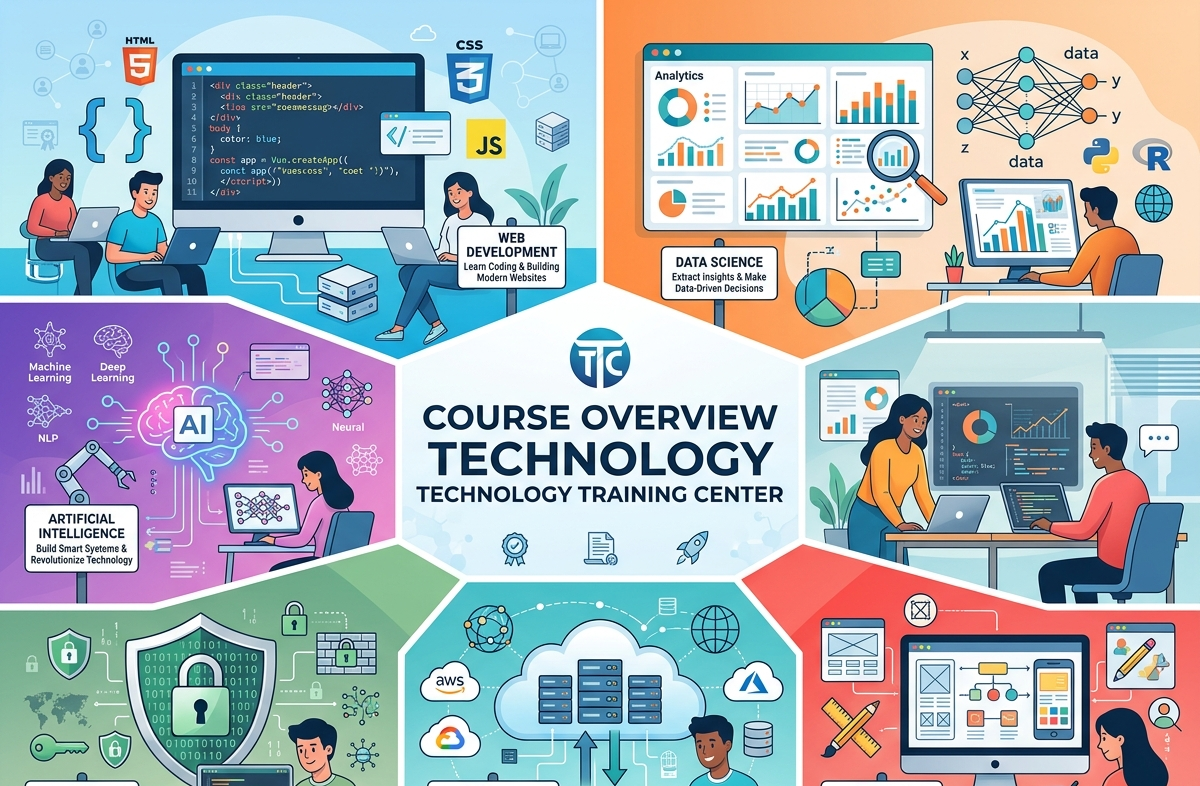
Course Overview – Complete Detailed Content
Introduction
In today’s fast-growing digital and technology-driven world, professional courses have become essential for building a successful career. Academic education alone is no longer enough to meet industry requirements. Employers now look for candidates who have practical knowledge, technical skills, and real-world experience.
A structured course is designed to bridge the gap between theoretical education and industry expectations. It provides learners with the right skills, tools, and confidence to perform effectively in their chosen field.
This course overview explains the structure, objectives, learning outcomes, and career benefits of professional training programs that help students achieve long-term success.
Objective of the Course
The main objective of this course is to develop job-ready skills in students and prepare them for real-world industry challenges.
Key objectives include:
- To provide practical knowledge along with theory
- To develop technical and professional skills
- To improve problem-solving ability
- To prepare students for employment opportunities
- To build confidence and career readiness
The course focuses on overall personality and skill development to ensure students succeed in competitive job markets.
Course Structure
The course is structured in a step-by-step learning format to ensure easy understanding and strong skill development.
1. Beginner Level (Foundation Stage)
At this stage, students learn the basic concepts of the subject. This includes:
- Introduction to tools and technologies
- Basic terminology
- Fundamental concepts
- Simple exercises
2. Intermediate Level
In this stage, students start working on practical applications:
- Hands-on practice
- Assignments and tasks
- Concept strengthening
- Real-life examples
3. Advanced Level
This stage focuses on professional and industry-level skills:
- Complex projects
- Advanced tools and techniques
- Problem-solving exercises
- Industry-based learning
4. Final Project
Students complete a real-world project that showcases their skills and understanding of the entire course.
Key Features of the Course
This course offers several important features that make it industry-relevant and career-focused:
- Industry-oriented curriculum
- Practical training approach
- Experienced trainers
- Live project work
- Updated tools and technologies
- Flexible learning options
These features ensure that students gain complete knowledge and hands-on experience.
Skills You Will Learn
This course helps students develop both technical and soft skills.
Technical Skills:
- Core subject knowledge
- Software and tool usage
- Practical implementation
- Analytical thinking
Soft Skills:
- Communication skills
- Time management
- Teamwork
- Problem-solving ability
- Professional behavior
Learning Methodology
The teaching method is designed to make learning simple, effective, and practical.
It includes:
- Concept explanation in simple language
- Live demonstrations
- Hands-on practice sessions
- Assignments and projects
- Regular assessments and feedback
This ensures complete understanding of every topic.
Practical Training Approach
Practical training is the most important part of this course. Students are given real-world tasks and projects to improve their skills.
Benefits of practical training:
- Better understanding of concepts
- Real industry experience
- Improved confidence
- Strong portfolio development
Students learn by doing, which prepares them for real job environments.
Tools and Technologies Covered
Depending on the course, students get exposure to modern tools and technologies such as:
- Programming languages
- Design software
- Development frameworks
- Digital tools
- Industry-standard applications
This ensures students are updated with current market trends.
Career Opportunities
After completing this course, students can explore multiple career opportunities in different industries.
Possible job roles include:
- Software Developer
- Web Developer
- Data Analyst
- Digital Marketer
- Graphic Designer
- IT Support Executive
The course opens doors to both job opportunities and freelancing careers.
Benefits of the Course
This course provides several long-term benefits:
- Job-ready skills
- Industry exposure
- Better salary opportunities
- Freelancing options
- Career growth opportunities
It helps students build a strong foundation for their professional journey.
Importance of Certification
After successful completion of the course, students receive certification that validates their skills and knowledge.
Benefits of certification:
- Improves job opportunities
- Adds value to resume
- Builds professional credibility
- Helps in career advancement
Future Scope
The future scope of this course is very strong due to increasing demand for skilled professionals in every industry.
Key growth areas include:
- Information Technology
- Digital Marketing
- Artificial Intelligence
- Data Science
- Web Development
Students who upgrade their skills regularly will have excellent career growth opportunities.
Importance of Real-World Industry Exposure
One of the most valuable aspects of a professional course is exposure to real-world industry practices. In today’s competitive job market, employers prefer candidates who already understand how industries operate, rather than those who only have theoretical knowledge.
This course integrates industry exposure through practical assignments, simulated environments, and project-based learning. Students are encouraged to work on scenarios that closely resemble real workplace situations. This helps them understand how professional tasks are assigned, managed, and completed within deadlines.
Industry exposure also helps students understand workplace communication, teamwork dynamics, and professional behavior. They learn how to interact with clients, respond to requirements, and handle feedback effectively. This experience becomes extremely useful when they step into their first job or internship.
Development of Problem-Solving Abilities
Problem-solving is one of the most important skills required in any profession. This course is designed to strengthen the analytical and logical thinking abilities of students.
Instead of simply memorizing concepts, students are trained to understand problems, analyze them, and develop practical solutions. Through coding exercises, design challenges, case studies, and technical tasks, learners gradually improve their ability to think critically.
This skill is especially important in fields such as IT, data science, digital marketing, and engineering, where professionals are constantly required to find efficient solutions to complex problems. Strong problem-solving ability not only improves job performance but also enhances career growth opportunities.
Focus on Professional Communication Skills
In addition to technical training, this course also emphasizes the importance of communication skills. Many students face challenges in expressing their ideas clearly in interviews or workplace environments. To address this, communication development is included as an essential part of the training.
Students are guided in:
- Spoken English and professional communication
- Presentation skills
- Group discussions
- Interview communication techniques
Effective communication plays a key role in career success. It helps individuals express ideas confidently, collaborate with teams, and present themselves professionally in front of employers.
Building Confidence Through Continuous Practice
Confidence is developed through consistent practice and real-time application of skills. This course ensures that students get enough opportunities to practice what they learn.
Regular assignments, presentations, mock tests, and project submissions help students become more confident over time. As they successfully complete tasks and solve challenges, they start believing in their abilities.
This confidence is extremely important during job interviews and professional environments, where individuals must demonstrate their knowledge and skills under pressure. A confident candidate is always more likely to succeed in competitive selection processes.
Importance of Continuous Assessment and Feedback
Continuous improvement is a key part of this course structure. Students are regularly assessed to track their progress and identify areas for improvement. These assessments are not only theoretical but also practical in nature.
Feedback is provided after each assignment or project, helping students understand their strengths and weaknesses. Constructive feedback allows learners to refine their skills and improve performance gradually.
This system of continuous evaluation ensures that students remain consistent in their learning and do not fall behind. It also motivates them to perform better in every stage of the course.
Adaptability to Modern Industry Trends
Industries today are evolving at a very fast pace. New technologies, tools, and methods are introduced regularly. This course is designed to keep students updated with the latest industry trends.
Training modules are regularly updated to include new technologies and practices. This ensures that students are not learning outdated concepts but are instead gaining knowledge that is relevant to the current job market.
Adaptability is a crucial skill in modern careers. Students who can quickly learn and adjust to new technologies are always in high demand across industries.
Encouragement for Independent Learning
One of the most important goals of this course is to encourage independent learning among students. While trainers provide guidance and support, students are also encouraged to explore topics on their own.
They are motivated to:
- Research new tools and technologies
- Practice beyond classroom hours
- Work on personal projects
- Explore online learning resources
This habit of self-learning helps students grow continuously even after completing the course. It also prepares them for long-term career success, where learning never stops.
Career Readiness and Industry Preparedness
The ultimate goal of this course is to make students completely job-ready. Every module is designed with industry requirements in mind, ensuring that learners gain the exact skills needed by employers.
Students are trained not only in technical knowledge but also in professional behavior, discipline, and workplace ethics. By the end of the course, they are well-prepared to enter the job market with confidence.
Career readiness includes:
- Technical proficiency
- Communication skills
- Project experience
- Interview preparation
This holistic approach ensures that students are fully prepared for both job placements and freelance opportunities.
Why TechCadd – Complete Detailed Content
Introduction
In today’s fast-changing world, education alone is not enough to build a successful career. The job market has become highly competitive, and employers are looking for candidates who not only have theoretical knowledge but also strong practical skills, industry exposure, and problem-solving abilities.
This is where professional training institutes play a crucial role in shaping careers. Among the many institutes available, TechCadd Computer Education has emerged as one of the most trusted and result-oriented training centers.
TechCadd is known for its practical training approach, industry-aligned courses, experienced faculty, and strong focus on student career development. The institute has helped thousands of students build successful careers in IT, design, digital marketing, CAD, and other technical fields.
The question “Why TechCadd?” can be answered by understanding its training methodology, career support system, and commitment to student success.
Vision and Mission
Vision
To become a leading skill development institute that empowers students with practical knowledge and industry-relevant training.
Mission
- To provide high-quality, job-oriented education
- To bridge the gap between academic learning and industry needs
- To develop skilled professionals ready for global opportunities
- To support students in achieving successful careers
Industry-Oriented Training Approach
One of the biggest strengths of TechCadd is its industry-oriented training model.
Unlike traditional education systems that focus mainly on theory, TechCadd emphasizes real-world application.
Students are trained through:
- Live projects
- Industry case studies
- Practical assignments
- Real-time problem-solving
This ensures that students are prepared for actual job environments.
Wide Range of Professional Courses
TechCadd offers a variety of courses across multiple domains, helping students choose according to their interests and career goals.
IT and Software Courses
- Python Programming
- Web Development
- Full Stack Development
- Data Science
CAD and Engineering Courses
- AutoCAD
- SolidWorks
- Revit Architecture
- Mechanical Design
Digital Marketing Courses
- SEO
- Social Media Marketing
- Google Ads
- Content Marketing
Design Courses
- Graphic Designing
- UI/UX Design
- Animation
This wide variety ensures career opportunities in multiple industries.
Experienced and Skilled Trainers
The quality of education depends heavily on the trainers. TechCadd has a team of experienced professionals who bring real industry knowledge into the classroom.
Benefits include:
- Clear concept explanation
- Practical industry insights
- Personalized guidance
- Real-time problem solving
Students learn not just what to study, but how it is applied in real-world scenarios.
Practical Learning Methodology
TechCadd strongly believes in “learning by doing.”
Students are trained through:
- Hands-on lab sessions
- Live projects
- Assignments and exercises
- Software-based practice
This approach helps students build confidence and improve technical skills effectively.
Job-Oriented Training Programs
Every course at TechCadd is designed to make students job-ready.
Training includes:
- Resume building sessions
- Interview preparation
- Mock interviews
- Communication skills development
This ensures that students are fully prepared for job interviews and workplace challenges.
Placement Assistance and Career Support
One of the key reasons to choose TechCadd is its strong placement support system.
The institute provides:
- Job referrals
- Interview opportunities
- Career counseling
- Industry connections
This support helps students transition smoothly from training to employment.
Modern Infrastructure and Learning Environment
TechCadd offers a professional and modern learning environment equipped with:
- Updated computer labs
- Latest software tools
- High-speed internet
- Comfortable classrooms
A good learning environment improves focus and enhances practical learning.
Affordable Fee Structure
Quality education should be accessible to everyone. TechCadd offers professional training at affordable fees.
Advantages:
- Cost-effective courses
- Flexible payment options
- High value for money
This makes skill development accessible to students from all backgrounds.
Certification and Professional Value
After completing courses, students receive certification that adds value to their resume.
Benefits:
- Recognized proof of skills
- Better job opportunities
- Professional credibility
- Career advancement support
Personalized Attention to Students
TechCadd ensures that each student receives individual attention.
Features include:
- Small batch sizes
- One-on-one mentoring
- Regular doubt-clearing sessions
This helps students learn effectively without confusion.
Flexible Learning Options
To support different types of learners, TechCadd offers:
- Classroom training
- Online classes
- Weekend batches
- Fast-track programs
This flexibility helps working professionals and students learn comfortably.
Focus on Skill Development
TechCadd focuses on developing both technical and soft skills.
Technical Skills:
- Programming
- Software tools
- Industry applications
Soft Skills:
- Communication
- Teamwork
- Time management
- Leadership
Both are essential for career success.
Portfolio Development and Real Projects
Students work on real-world projects to build a strong portfolio.
Benefits:
- Demonstrates skills to employers
- Increases job chances
- Builds confidence
Personality Development Training
TechCadd also focuses on overall personality development.
Students are trained in:
- Communication skills
- Professional behavior
- Confidence building
Freelancing and Entrepreneurship Opportunities
TechCadd also helps students explore freelancing and business opportunities.
Guidance includes:
- Client handling
- Project management
- Freelance platforms usage
This opens multiple income opportunities for students.
Continuous Learning and Support
Learning does not stop after course completion. TechCadd provides:
- Updated learning materials
- Advanced training options
- Career guidance support
Strong Reputation and Trust
Over the years, TechCadd has built a strong reputation in the education industry due to:
- Student success stories
- Quality training programs
- Positive reviews
This trust makes it a preferred institute among students.
Adaptation to Industry Trends
TechCadd continuously updates its curriculum according to industry trends such as:
- Artificial Intelligence
- Cloud Computing
- Digital Transformation
- Automation
This ensures students stay relevant in the job market.
Career Opportunities After TechCadd
Students can build careers in multiple fields:
- Software Development
- Digital Marketing
- Web Development
- Graphic Design
- CAD Engineering
Future Scope for Students
The future scope for TechCadd students is strong due to increasing demand for skilled professionals in:
- IT sector
- Digital industries
- Design and development
- Freelancing markets
Importance of Soft Skills
Soft skills play a major role in career success:
- Communication
- Problem-solving
- Teamwork
- Leadership
Strong Focus on Real Industry Exposure
One of the key reasons students prefer TechCadd Computer Education is its strong emphasis on real industry exposure. In today’s competitive job market, companies do not only look for academic knowledge—they expect candidates to understand how real projects and workflows operate in professional environments.
TechCadd bridges this gap by exposing students to practical industry scenarios. Learners are encouraged to work on assignments and projects that are designed based on real client requirements. This approach helps students understand how tasks are assigned, how deadlines are managed, and how deliverables are prepared in a professional setting.
This exposure is extremely valuable because it builds confidence and prepares students for actual workplace conditions. Instead of facing job challenges for the first time after hiring, students already experience similar situations during training, making their transition into the industry much smoother.
Development of Logical and Analytical Thinking
Another major strength of TechCadd is its focus on developing logical and analytical thinking among students. In technical fields like IT, design, and programming, success depends not only on memorizing concepts but also on the ability to analyze problems and find efficient solutions.
Students are trained to break down complex problems into smaller parts, understand their structure, and develop step-by-step solutions. This method improves their critical thinking abilities and makes them more confident in handling technical challenges.
Regular practice sessions, coding exercises, and real-world assignments ensure that students develop a strong problem-solving mindset. This skill becomes extremely useful in interviews and workplace situations where quick and accurate decision-making is required.
Continuous Evaluation and Performance Improvement
TechCadd follows a structured evaluation system that ensures continuous improvement of students throughout their learning journey. Regular assessments, tests, and practical evaluations help track progress and identify areas where students need improvement.
Instead of waiting until the end of the course, feedback is provided continuously. This allows students to correct their mistakes early and improve steadily. Trainers also provide personalized suggestions based on each student’s performance, helping them grow at their own pace.
This continuous evaluation system ensures that no student is left behind and every learner receives proper guidance to achieve their goals.
Confidence Building Through Practical Practice
Confidence is one of the most important qualities required for professional success. Many students have theoretical knowledge but struggle to apply it confidently in real situations. TechCadd addresses this issue by providing extensive practical training opportunities.
Students regularly work on live tasks, presentations, and project demonstrations. These activities help them become more comfortable with their skills and improve their ability to perform under pressure.
As students successfully complete tasks and projects, their confidence naturally increases. This confidence plays a major role during job interviews, group discussions, and professional interactions.
Encouragement of Independent Learning
TechCadd also encourages students to develop independent learning habits. While structured training is provided in classrooms, students are also motivated to explore topics on their own.
They are guided to:
- Research new technologies
- Practice additional exercises
- Build personal projects
- Stay updated with industry trends
This habit of self-learning is extremely important in the technology field, where tools and technologies change rapidly. Students who learn independently are able to adapt quickly and stay competitive in the job market.
Career Growth and Long-Term Success
The ultimate goal of TechCadd is not just to provide training, but to ensure long-term career growth for students. Every aspect of the training program is designed to make students industry-ready and capable of achieving professional success.
Whether students aim for jobs in IT companies, freelancing careers, or entrepreneurship, the skills gained at TechCadd provide a strong foundation for all paths.
By combining technical knowledge, practical exposure, communication skills, and confidence building, TechCadd prepares students for sustainable career success in a rapidly evolving industry.
Future Scope – Complete Detailed Content
Introduction
The concept of future scope has become one of the most important factors in modern education and career planning. In today’s fast-changing world, industries are evolving rapidly due to technological advancements, digital transformation, globalization, and automation. Because of these changes, students and professionals must understand the future scope of their chosen field before making career decisions.
Future scope refers to the potential growth, opportunities, demand, and long-term stability of a particular career or industry. It helps individuals understand whether a specific field will remain relevant, grow in demand, and provide stable career opportunities in the coming years.
In the modern era, traditional job paths are no longer the only option. New-age careers are emerging in fields such as Information Technology, Artificial Intelligence, Data Science, Digital Marketing, Cybersecurity, Cloud Computing, Web Development, and many more. These fields are continuously expanding and creating millions of job opportunities globally.
Understanding future scope is essential for students because it helps them choose the right career path, develop the right skills, and stay ahead in the competitive job market.
Importance of Understanding Future Scope
Understanding future scope is crucial for career planning and long-term success.
Key Importance:
- Helps in selecting the right career path
- Reduces risk of unemployment
- Improves job security
- Increases earning potential
- Supports long-term career growth
- Helps in skill development planning
When individuals understand future scope clearly, they can invest their time and energy in the right direction and avoid outdated or low-demand career options.
Future Scope in the Digital World
The digital world has completely transformed how businesses and industries operate. Almost every organization now depends on digital platforms for marketing, communication, operations, and customer engagement.
Growing Areas:
- Digital Marketing
- Social Media Management
- E-commerce Platforms
- Online Branding
- Content Creation
The demand for digital professionals is increasing rapidly as businesses shift online. This trend is expected to grow even more in the future.
Future Scope in Information Technology (IT)
Information Technology is one of the fastest-growing industries in the world. It offers a wide range of career opportunities and high-paying jobs.
Career Roles:
- Software Developer
- Web Developer
- App Developer
- IT Support Specialist
- System Analyst
The IT industry is constantly evolving with new technologies, making it one of the most stable and promising career fields.
Future Scope in Artificial Intelligence (AI)
Artificial Intelligence is revolutionizing every industry. From healthcare and education to finance and transportation, AI is being widely used.
Career Opportunities:
- AI Engineer
- Machine Learning Specialist
- Robotics Developer
- Automation Expert
AI is expected to create millions of new jobs in the coming years while also transforming existing roles.
Future Scope in Data Science
Data is one of the most valuable resources in today’s world. Companies use data to make business decisions and improve performance.
Career Roles:
- Data Analyst
- Data Scientist
- Business Analyst
- Big Data Engineer
The demand for data professionals is growing rapidly across all industries.
Future Scope in Cybersecurity
With increasing digitalization, cyber threats are also rising. This has made cybersecurity one of the most important fields.
Career Roles:
- Cybersecurity Analyst
- Ethical Hacker
- Security Engineer
- Network Security Expert
Organizations are investing heavily in cybersecurity, creating strong job opportunities.
Future Scope in Web Development
Every business today needs a website or online platform, making web development a highly in-demand skill.
Career Opportunities:
- Frontend Developer
- Backend Developer
- Full Stack Developer
- UI Developer
The demand for web developers is expected to remain strong in the future.
Future Scope in Cloud Computing
Cloud computing has become the backbone of modern IT infrastructure.
Career Roles:
- Cloud Engineer
- DevOps Engineer
- Cloud Architect
Companies are rapidly moving to cloud-based systems, increasing demand for skilled professionals.
Future Scope in Digital Marketing
Digital marketing has become essential for business growth in the online world.
Career Opportunities:
- SEO Specialist
- Social Media Manager
- PPC Expert
- Content Marketer
It also offers freelancing and remote work opportunities.
Future Scope in Engineering Fields
Engineering continues to be a strong career option with evolving technologies.
Fields Include:
- Civil Engineering
- Mechanical Engineering
- Electrical Engineering
- CAD Design
Infrastructure development ensures continuous demand for engineers.
Future Scope in Freelancing and Remote Work
Freelancing has become a major career option in the modern economy.
Benefits:
- Work from anywhere
- Flexible schedule
- Global clients
- Multiple income sources
Freelancing is expected to grow further with digital platforms.
Future Scope in Entrepreneurship
Entrepreneurship is growing rapidly due to startup culture and digital opportunities.
Opportunities:
- Tech startups
- Online businesses
- Digital agencies
- E-commerce ventures
Many skilled professionals are now becoming entrepreneurs instead of job seekers.
Role of Emerging Technologies
Emerging technologies are shaping the future of all industries.
Key Technologies:
- Artificial Intelligence
- Machine Learning
- Blockchain
- Internet of Things (IoT)
- Augmented Reality (AR)
- Virtual Reality (VR)
These technologies are creating new job roles and industries.
Future Scope in India
India is one of the fastest-growing economies with strong digital transformation.
Growth Areas:
- IT industry expansion
- Startup ecosystem
- Digital economy
- Manufacturing growth
India offers huge opportunities for skilled professionals.
Importance of Skill Development
Skill development is the key to success in any future career.
Important Skills:
- Technical skills
- Communication skills
- Problem-solving skills
- Leadership skills
Continuous learning is essential for long-term success.
Challenges in Future Careers
Despite opportunities, there are also challenges:
- Rapid technological changes
- High competition
- Need for continuous upskilling
- Global job competition
Importance of Soft Skills
Soft skills play a major role in career success.
Key Soft Skills:
- Communication
- Teamwork
- Time management
- Leadership
Career Growth Opportunities
Future careers offer strong growth possibilities:
- Promotions
- Salary increases
- International opportunities
- Freelancing income
Work-Life Balance in Future Careers
Modern careers offer better flexibility:
- Remote jobs
- Hybrid work models
- Freelancing options
Continuous Learning and Adaptability
In the future, learning will never stop. Professionals must continuously upgrade their skills to stay relevant.
Future Scope in Global Employment Opportunities
One of the most significant advantages of modern career fields is the availability of global employment opportunities. In earlier times, job seekers were mostly limited to local or national markets. However, with digital transformation and remote working systems, professionals can now work for international companies from anywhere in the world.
This globalization of work has created a highly competitive but rewarding job market. Companies in countries such as the USA, Canada, UK, Germany, Australia, and the Middle East actively hire skilled professionals from India and other developing nations. The demand is mainly based on skills rather than geographical location.
Fields like Information Technology, Data Science, Digital Marketing, Software Development, and Cybersecurity offer strong global career opportunities. Professionals with strong technical skills and communication abilities can secure high-paying remote jobs or even relocate abroad for better career growth.
Global exposure not only increases earning potential but also enhances professional experience. Working with international teams helps individuals understand different work cultures, advanced technologies, and global business practices. This experience is highly valuable for long-term career development.
Future Scope of Artificial Intelligence Integration in Every Industry
Artificial Intelligence (AI) is no longer limited to a specific industry; it is becoming a core part of almost every sector. From healthcare and education to finance, manufacturing, and retail, AI is transforming the way businesses operate.
In the future, AI will continue to automate repetitive tasks, improve decision-making processes, and enhance productivity. This will create new job roles that require advanced technical knowledge and analytical thinking.
Emerging AI-Based Opportunities:
- AI Software Developer
- Machine Learning Engineer
- AI Data Analyst
- Robotics Technician
- Automation Specialist
While AI may replace certain manual jobs, it will also create millions of new opportunities for skilled professionals who can work with advanced systems. This makes AI one of the most important future career domains.
Future Scope in Digital Transformation of Businesses
Every business today is undergoing digital transformation. Companies are shifting from traditional methods to digital platforms to improve efficiency, reach more customers, and increase profitability.
This transformation is creating strong demand for professionals in digital technologies, IT services, and online business management.
Key Areas of Digital Growth:
- E-commerce platforms
- Online marketing systems
- Cloud-based operations
- Data-driven decision-making
Businesses now rely heavily on digital tools for operations, which means skilled professionals will always be required to manage and optimize these systems.
Future Scope in Innovation and Technology Development
Innovation is the driving force behind future career growth. As new technologies continue to emerge, industries will require professionals who can develop, manage, and improve these technologies.
Fields such as robotics, blockchain, augmented reality, virtual reality, and IoT are expected to grow significantly in the coming years.
Innovation-Based Careers:
- Blockchain Developer
- IoT Engineer
- AR/VR Developer
- Robotics Engineer
These advanced fields are still evolving, which means early learners in these domains will have a strong advantage in the future job market.
Future Scope in Continuous Skill Upgradation
One of the most important aspects of future career success is continuous learning. Technologies and industry requirements change rapidly, making it necessary for professionals to upgrade their skills regularly.
Individuals who stop learning risk becoming outdated in their careers. On the other hand, those who continuously learn new tools, technologies, and techniques remain highly competitive.
Skill upgradation ensures:
- Better job security
- Higher salary growth
- Career stability
- Global opportunities
This makes lifelong learning a key factor in determining future success.