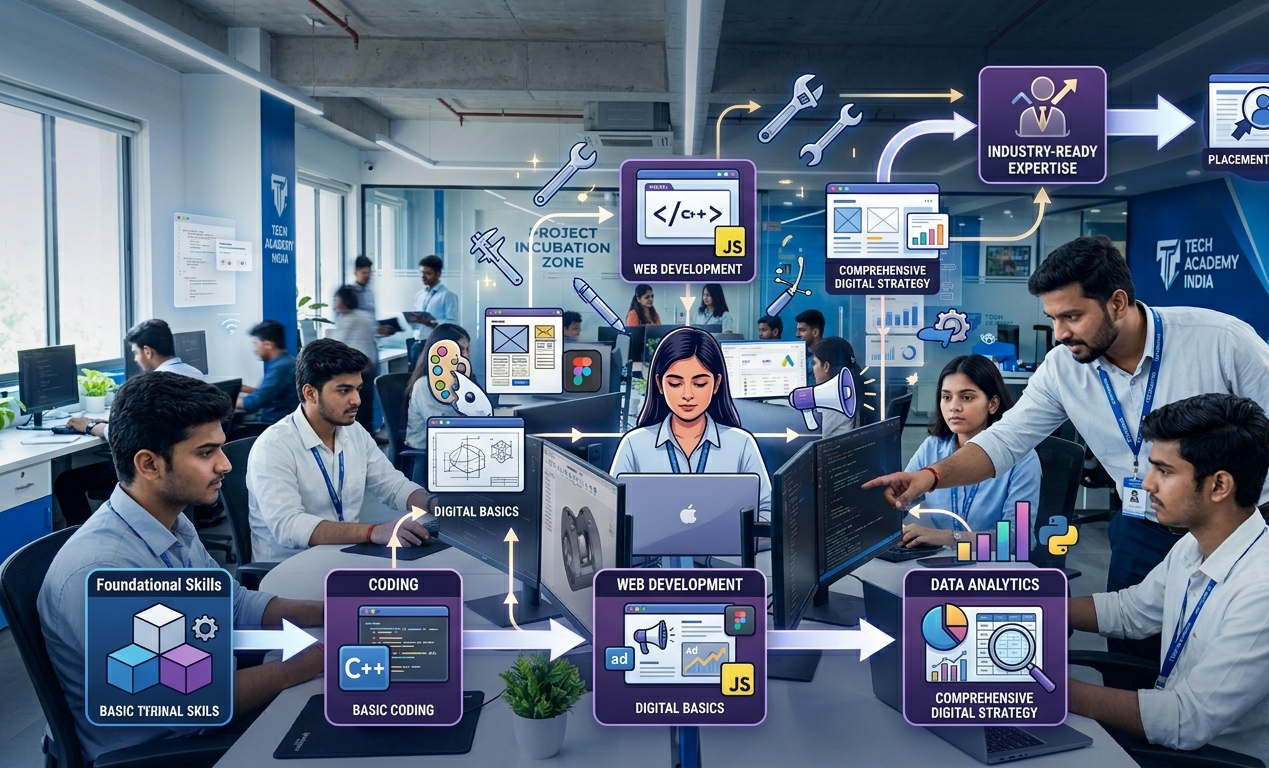
Course Overview – Best Practical Training Institute in Jalandhar
Introduction – The Need for Practical Skills in the Modern World
In today’s rapidly evolving world, education is no longer limited to textbooks, theory, and examinations. The global job market has transformed significantly due to advancements in technology, automation, artificial intelligence, and digitalization. Employers are no longer satisfied with candidates who only possess academic knowledge. Instead, they are actively searching for individuals who have practical skills, real-world experience, and the ability to apply knowledge effectively in professional environments.
This shift has made practical training institutes extremely important in shaping modern careers. A Best Practical Training Institute in Jalandhar plays a crucial role in bridging the gap between academic education and industry requirements by offering skill-based learning programs that focus on hands-on experience, live projects, and career-oriented training.
The primary objective of this course is to transform students into industry-ready professionals who can confidently work in real-world job environments or start their own careers as freelancers and entrepreneurs.
Unlike traditional education systems that rely heavily on theoretical learning, this program focuses on learning by doing, ensuring that students develop real skills that are directly applicable in industries.
What is This Course About?
This course is a comprehensive practical training program designed to provide students with hands-on experience in various modern career fields such as IT, design, marketing, development, and data-related technologies.
The course focuses on building skills in:
- Web Development
- Software Development
- Graphic Designing
- Digital Marketing
- UI/UX Design
- Data Analytics
- CAD & Technical Design
- IT Tools & Applications
- Freelancing Skills
The main goal is to ensure that students become job-ready professionals with strong technical and practical abilities.
This program is suitable for beginners, graduates, job seekers, and even working professionals who want to upgrade their skills.
Why Practical Training is Important Today
The importance of practical training has increased due to the changing nature of industries.
Key Reasons:
- Companies require skilled professionals, not just degree holders
- Rapid growth of digital industries
- Increasing competition in job markets
- Rise of freelancing and remote work culture
- Automation replacing repetitive jobs
In this environment, practical knowledge becomes the most valuable asset for career growth.
Students who undergo practical training gain an advantage in:
- Job interviews
- Freelancing platforms
- Corporate environments
- Entrepreneurial ventures
Course Structure – Step-by-Step Learning Approach
The course is designed in a structured way to ensure gradual skill development.
1. Beginner Level
Students are introduced to basic concepts, tools, and fundamental principles.
2. Intermediate Level
Students start working on practical exercises and small projects.
3. Advanced Level
Students learn industry-level tools, techniques, and workflows.
4. Project-Based Learning
Students apply their knowledge in real-world projects.
5. Career Preparation Stage
Students are trained for interviews, freelancing, and job placements.
This structured approach ensures complete understanding and confidence building.
Core Modules of the Course
The course includes multiple professional modules designed for career development.
1. Web Development Module
Web development is one of the most in-demand skills in the digital world.
Topics Covered:
- HTML, CSS, JavaScript
- Responsive Web Design
- Frontend Development
- Backend Development Basics
- Database Integration
- CMS platforms (WordPress)
Learning Outcome:
Students learn to create professional websites and web applications.
2. Software Development Module
This module focuses on programming and application development.
Topics Covered:
- Python Programming
- Java Programming
- C++ Fundamentals
- Data Structures Basics
- Problem-Solving Techniques
Learning Outcome:
Students gain strong coding and software development skills.
3. Graphic Designing Module
Graphic design is a creative and high-demand field.
Topics Covered:
- Adobe Photoshop
- Adobe Illustrator
- Branding Design
- Logo Creation
- Social Media Creatives
Learning Outcome:
Students develop professional-level design skills.
4. Digital Marketing Module
Digital marketing is essential for business growth in the modern world.
Topics Covered:
- SEO (Search Engine Optimization)
- Social Media Marketing
- Google Ads (PPC)
- Content Marketing
- Email Marketing
Learning Outcome:
Students learn how to promote businesses online effectively.
5. UI/UX Design Module
User experience design is critical for digital products.
Topics Covered:
- UI Design Principles
- UX Research
- Wireframing
- Prototyping
- Design Thinking
Learning Outcome:
Students learn to design user-friendly digital interfaces.
6. Data Analytics Module
Data is the foundation of modern business decision-making.
Topics Covered:
- Advanced Excel
- Power BI
- Data Visualization
- Business Intelligence
- Data Interpretation
Learning Outcome:
Students learn to analyze and present data effectively.
7. CAD & Technical Training Module
This module is ideal for engineering and technical students.
Topics Covered:
- AutoCAD
- 2D Drafting
- 3D Modeling
- Mechanical Design
- Architectural Planning
Learning Outcome:
Students gain technical design and engineering skills.
Teaching Methodology – Learning by Doing
The institute follows a practical-first teaching approach.
Methods Used:
- Live project training
- Interactive classroom sessions
- Practical assignments
- Real-world simulations
- Case study analysis
This ensures students gain real experience instead of just theoretical knowledge.
Tools and Technologies Used
Students work with industry-standard tools such as:
- Visual Studio Code
- Adobe Photoshop
- Illustrator
- AutoCAD
- Power BI
- WordPress
- Google Analytics
This prepares students for real job environments.
Importance of Hands-On Training
Hands-on training helps students:
- Understand real-world applications
- Build confidence
- Improve technical skills
- Gain industry experience
- Develop problem-solving abilities
This is the core strength of practical training institutes.
Career Opportunities After Completion
Students can build careers in multiple fields such as:
- Web Developer
- Software Engineer
- Graphic Designer
- Digital Marketer
- UI/UX Designer
- Data Analyst
- CAD Designer
- Freelancer
These careers offer strong growth potential and income opportunities.
Freelancing and Remote Work Opportunities
Students are also trained to work on global platforms like:
They can work with international clients and earn remotely.
Importance of Industry Exposure
Industry exposure helps students understand:
- Real project workflows
- Client requirements
- Professional standards
- Deadlines and teamwork
This prepares them for corporate environments.
Skill Development Focus
The institute focuses on developing:
- Technical skills
- Logical thinking
- Creativity
- Analytical ability
- Communication skills
These skills are essential for career success.
Entrepreneurship Opportunities
Students can also start their own businesses such as:
- IT companies
- Design studios
- Marketing agencies
- Freelance service businesses
Practical training supports entrepreneurship growth.
Global Job Opportunities
Students can work in countries like:
- USA
- Canada
- UK
- Australia
- UAE
Remote work allows global opportunities without relocation.
Importance of Updated Curriculum
The curriculum is regularly updated based on:
- Industry trends
- New technologies
- Market demand
- Software updates
This ensures students learn relevant skills.
Soft Skills and Personality Development
Students also learn:
- Communication skills
- Confidence building
- Teamwork
- Professional ethics
- Time management
These skills enhance employability.
Future Scope of Practical Training
The future of practical training is extremely bright due to:
- Digital transformation
- AI and automation growth
- Freelancing expansion
- Remote work culture
- Global IT demand
Difference Between Theory and Practical Training
| Theory-Based Education |
Practical Training |
| Memorization |
Hands-on learning |
| Exam-focused |
Skill-focused |
| Low industry exposure |
Real-world projects |
| Limited job readiness |
Job-ready skills |
Advanced Industry Readiness and Professional Workflow Training
As students progress through the practical training program, they are gradually introduced to advanced industry readiness modules that simulate real corporate environments. This stage is designed to ensure that learners not only understand technical tools but also develop the ability to work in structured professional workflows.
Students are trained on how real companies operate, including project planning, task distribution, deadline management, and quality assurance processes. They learn how to handle client requirements, respond to feedback, and deliver work according to professional standards. This exposure is extremely important because it prepares students for the actual challenges they will face in their careers.
In addition, students are introduced to collaborative working environments where teamwork plays a key role. They participate in group-based projects that help them understand communication, coordination, and responsibility sharing. These experiences are essential for developing workplace discipline and professional behavior.
Portfolio Development and Career Branding
Another important aspect of the course is personal portfolio development. In today’s competitive job market, a strong portfolio is often more important than a traditional resume. Employers and clients prefer candidates who can demonstrate their skills through real work samples.
Students are guided to create professional portfolios that include:
- Website development projects
- Graphic design work
- Digital marketing case studies
- Data analysis reports
- CAD and technical drawings
- UI/UX design prototypes
Each project is carefully structured to reflect industry standards, ensuring that students can confidently showcase their abilities during interviews or freelance proposals.
Along with portfolio building, students also learn personal branding techniques, including how to present themselves professionally on platforms like LinkedIn and freelance marketplaces. This helps them build credibility and visibility in the job market.
Continuous Skill Upgradation and Learning Mindset
The technology industry is constantly evolving, and new tools, frameworks, and trends are introduced regularly. To remain competitive, students must adopt a mindset of continuous learning and skill upgradation.
The institute encourages students to stay updated with:
- New software tools and technologies
- Industry trends and market demands
- Advanced learning resources and certifications
- Online learning platforms and communities
This approach ensures that learning does not stop after course completion. Instead, students develop a habit of lifelong learning, which is essential for long-term career success.
Why TechCADD – The Best Choice for Skill Development, Career Growth & Practical Training
Introduction – Why Choosing the Right Institute Changes Your Entire Career
In today’s fast-moving world, education alone is no longer enough to guarantee success. Every year, thousands of students complete their degrees, but many still struggle to find good jobs. The reason is simple: lack of practical skills, industry exposure, and real-world experience.
Modern industries demand professionals who can perform tasks, solve problems, and deliver results from day one. Employers are no longer impressed by only certificates or degrees; they want candidates who can demonstrate real ability in software, tools, communication, and execution.
This is exactly where TechCADD plays a powerful role.
TechCADD is not just a training institute—it is a complete career transformation platform that focuses on building skilled professionals who are ready for real industry challenges. It bridges the gap between academic education and professional requirements by providing practical training, live projects, and industry-oriented learning.
Choosing TechCADD means choosing:
- Skill-based education
- Career-focused training
- Practical knowledge
- Industry exposure
- Global opportunities
It means choosing a future where you are not just educated—but employable, skilled, and confident.
1. TechCADD – A Skill Development Powerhouse
TechCADD is designed to create a strong foundation for students in multiple career domains such as:
- Information Technology
- Design and Creativity
- Engineering and CAD
- Digital Marketing
- Software Development
- Freelancing Skills
Instead of focusing only on theory, TechCADD focuses on hands-on practical learning, ensuring that students are fully prepared for real job roles.
The institute acts as a skill development hub, helping students become professionals who can confidently work in companies or start their own careers.
2. Industry-Oriented Training Approach
One of the strongest reasons to choose TechCADD is its industry-driven training methodology.
The curriculum is designed based on real industry requirements, not outdated academic patterns.
Students are trained in:
- Real-world workflows
- Industry-standard tools
- Practical project execution
- Case-based learning
- Problem-solving techniques
This ensures that students understand how companies actually operate and what skills are required in real job environments.
3. Focus on Practical Learning Over Theory
Traditional education systems often focus on memorization and theoretical knowledge. TechCADD takes a completely different approach by emphasizing learning through practice.
Students gain experience through:
- Live projects
- Software-based training
- Design and development tasks
- Simulation of real industry scenarios
- Hands-on assignments
This method helps students build confidence and develop real skills instead of just theoretical understanding.
By working on practical tasks, students learn how to solve real problems, manage projects, and deliver professional results.
4. Expert Trainers with Real Industry Experience
TechCADD has a team of highly qualified trainers who bring real industry experience into the classroom.
These trainers are not just teachers—they are professionals who have worked in IT companies, design studios, engineering firms, and marketing agencies.
They provide:
- Practical knowledge
- Industry insights
- Real project guidance
- Career mentoring
- Interview preparation support
This ensures students learn from professionals who understand current industry demands.
5. Wide Range of Career-Oriented Courses
TechCADD offers multiple professional courses that help students choose their career path.
Popular Courses Include:
- Graphic Designing
- Web Development
- Digital Marketing
- AutoCAD & Engineering Design
- Civil & Mechanical CAD
- UI/UX Design
- 3D Modeling & Animation
- IT & Software Training
Each course is designed with a step-by-step learning structure from beginner to advanced level.
6. Hands-On Training Through Live Projects
One of the most powerful features of TechCADD is its live project training system.
Students work on real-world projects such as:
- Website development for businesses
- Brand identity design
- Marketing campaign creation
- Engineering drafting and modeling
- UI/UX design prototypes
This helps students build a professional portfolio, which is extremely valuable for job interviews and freelancing opportunities.
7. Modern Infrastructure and Learning Environment
TechCADD provides a modern and professional learning environment that enhances student performance.
Facilities include:
- Advanced computer labs
- Latest software tools
- Smart classrooms
- High-speed internet
- Practical training setups
This environment ensures that students learn in conditions similar to real industry workplaces.
8. Skill Development That Matters in Real Life
TechCADD focuses on developing skills that are actually required in the job market.
Students gain:
- Technical skills
- Logical thinking
- Creativity
- Analytical ability
- Communication skills
This combination makes students job-ready and industry-ready.
9. Career Support and Placement Assistance
TechCADD provides strong career support services including:
- Resume building
- Interview preparation
- Mock interviews
- Internship support
- Job placement assistance
This ensures that students are fully prepared to enter the professional world.
10. Freelancing and Global Career Opportunities
TechCADD also trains students for freelancing and remote work opportunities.
Students learn how to work on platforms like:
They are trained to:
- Handle international clients
- Manage projects independently
- Build professional profiles
- Earn globally
This opens doors to international income opportunities.
11. Personality Development and Soft Skills Training
Technical skills alone are not enough for success. TechCADD also focuses on personality development and communication skills.
Students are trained in:
- Communication skills
- Confidence building
- Presentation skills
- Professional behavior
- Time management
These skills are essential for interviews and workplace success.
12. Affordable Education with High Value
TechCADD offers high-quality training at an affordable cost, making it accessible for students from different backgrounds.
Despite reasonable fees, students receive:
- Industry-level training
- Expert mentorship
- Practical exposure
- Career support
This makes TechCADD a value-for-money institute.
13. Updated Curriculum Based on Industry Trends
Technology changes rapidly, and TechCADD ensures that its curriculum is always updated.
Students learn:
- Latest tools and software
- Modern techniques
- Industry trends
- Market requirements
This ensures long-term career relevance.
14. Building Strong Student Portfolios
Students are encouraged to build professional portfolios that include:
- Design projects
- Development work
- Marketing campaigns
- CAD drawings
- UI/UX prototypes
A strong portfolio helps students stand out in job applications.
15. Entrepreneurship Opportunities
TechCADD also helps students become entrepreneurs.
They can start:
- IT companies
- Design studios
- Digital agencies
- Freelance businesses
This transforms students from job seekers into job creators.
16. Global Job Market Opportunities
TechCADD-trained students can work globally in countries such as:
- USA
- Canada
- UK
- Australia
- UAE
Remote work further expands global opportunities.
17. Bridging the Gap Between Education and Employment
One of the biggest challenges in education is the gap between academic learning and industry requirements.
TechCADD solves this by:
- Providing practical training
- Offering live projects
- Teaching industry tools
- Preparing students for real jobs
This ensures students are fully job-ready.
18. Future Scope of TechCADD Training
The future of skill-based education is extremely bright due to:
- AI and automation growth
- Digital transformation
- Freelancing expansion
- Global IT demand
TechCADD prepares students for all future opportunities.
19. Real-World Project Exposure and Industry Simulation
One of the most powerful aspects of TechCADD training is its strong focus on real-world project exposure and industry simulation learning. Students are not limited to theoretical exercises or basic assignments; instead, they are continuously involved in projects that closely replicate actual industry requirements.
This includes working on:
- Client-based project simulations
- Deadline-driven assignments
- Team collaboration tasks
- Real business problem-solving scenarios
- Software-based production workflows
Through this approach, students understand how professional companies operate in real time. They learn how to manage workload, meet deadlines, communicate with team members, and deliver high-quality results under pressure.
This experience builds a strong foundation of workplace readiness, ensuring that students are not confused when they enter their first job. Instead, they already understand how industry environments function, making them more confident and efficient.
20. Personalized Attention and Mentorship Model
TechCADD follows a student-centered mentorship model, where each learner receives individual attention based on their skill level and learning pace. Unlike traditional classrooms where teaching is generalized, TechCADD ensures that every student gets proper guidance and support.
Mentors focus on:
- Identifying student strengths and weaknesses
- Providing personalized feedback on projects
- Offering career guidance based on interest areas
- Helping with skill improvement strategies
- Motivating students for consistent growth
This personalized approach ensures that no student feels left behind. It also helps learners choose the right career path, whether in development, design, marketing, or freelancing.
Such mentorship plays a crucial role in shaping confident, focused, and goal-oriented professionals.
21. Strong Portfolio Development for Career Success
In today’s competitive job market, employers prefer candidates who can demonstrate their skills through practical work portfolios rather than just certificates. TechCADD places strong emphasis on helping students build a professional portfolio throughout their training journey.
Students are guided to create a collection of real work, including:
- Website development projects
- Graphic design branding work
- Digital marketing campaign reports
- CAD drawings and engineering models
- UI/UX design prototypes
- Software and coding projects
By the end of the course, students have a strong portfolio that reflects their actual capabilities. This significantly increases their chances of getting selected in interviews, internships, and freelance projects.
A well-structured portfolio also helps students stand out in the global freelance market and attract international clients.
22. Continuous Learning Culture and Future Readiness
TechCADD does not just focus on completing a course; it builds a continuous learning mindset in students. Since technology is constantly evolving, professionals must regularly update their skills to stay relevant in the industry.
Students are encouraged to:
- Learn new tools and technologies
- Stay updated with industry trends
- Participate in workshops and certifications
- Explore advanced learning resources
- Improve skills through self-practice
This habit of lifelong learning ensures that students remain competitive even years after completing their training.
It also prepares them for future technological changes such as automation, AI integration, and digital transformation across industries.
Future Scope of Practical Training, Technology Learning & Skill Development
Introduction – The Future is Skill-Driven, Not Degree-Driven
The world is undergoing a massive transformation driven by technology, automation, artificial intelligence, and digital innovation. In this rapidly evolving environment, traditional education systems alone are no longer sufficient to prepare students for real-world challenges.
Earlier, degrees were considered the main requirement for securing a job. However, in today’s modern economy, employers focus more on skills, practical knowledge, problem-solving ability, and hands-on experience. This shift has created a huge demand for practical training and skill development programs.
The future scope of practical training and technology-based learning is extremely vast because industries are continuously evolving, and new job roles are emerging every year. Students who invest in skill-based education today will have access to high-paying jobs, global opportunities, freelancing careers, and entrepreneurial success in the future.
This detailed guide explains the future scope of practical training across multiple industries and career paths.
1. Shift Toward Skill-Based Economy
One of the biggest global changes is the shift from a degree-based economy to a skill-based economy.
In the past:
- Degrees guaranteed jobs
- Theoretical knowledge was enough
- Limited competition existed
In the present and future:
- Skills matter more than degrees
- Practical experience is essential
- Competition is global
Companies now hire candidates based on their ability to perform tasks, not just academic qualifications.
This shift has increased the importance of:
- Practical training institutes
- Skill development programs
- Industry-based certifications
- Hands-on learning models
Students with strong practical skills will always have better career opportunities.
2. Future Scope in Information Technology (IT)
The IT industry continues to dominate the global job market and will remain a major source of employment in the future.
Future IT Career Opportunities:
- Software development
- Web and mobile app development
- Cloud computing
- Cybersecurity
- DevOps engineering
- System architecture
As digital transformation expands, every company will require IT professionals to manage systems, applications, and data.
The future of IT is not limited to coding alone but includes automation, system integration, and advanced digital solutions.
3. Future Scope in Artificial Intelligence and Automation
Artificial Intelligence (AI) is one of the fastest-growing technologies in the world. It is transforming industries by making systems smarter, faster, and more efficient.
AI Applications in Future:
- Chatbots and virtual assistants
- Predictive analytics
- Smart automation systems
- Machine learning models
- Intelligent business tools
AI will not replace humans completely but will change job roles and create new opportunities.
Future AI Careers:
- AI engineers
- Machine learning specialists
- Data trainers
- Automation experts
Students with AI-related skills will have extremely high demand in the future job market.
4. Future Scope in Digital Marketing
Digital marketing is becoming essential for every business, from startups to large corporations.
Future Trends:
- AI-driven marketing
- Influencer marketing growth
- Video-based content dominance
- Voice search optimization
- Personalized advertising
Every business needs online visibility, which makes digital marketing professionals highly valuable.
Career Roles:
- SEO specialists
- Social media managers
- PPC experts
- Content strategists
- Brand marketers
The demand for digital marketers will continue to grow globally.
5. Future Scope in Web Development and Design
Web development remains one of the strongest career fields in the digital economy.
Future Trends:
- AI-powered websites
- Progressive web applications
- No-code/low-code platforms
- Interactive UI/UX systems
- Mobile-first development
Career Opportunities:
- Frontend developers
- Backend developers
- Full-stack developers
- UI/UX designers
Web development skills will remain essential for decades.
6. Future Scope in Data Analytics and Big Data
Data is considered the new oil of the digital world. Every business depends on data to make decisions.
Future Data Trends:
- Big data analytics
- Business intelligence tools
- Predictive analytics
- Data visualization systems
Career Opportunities:
- Data analysts
- Business analysts
- Data scientists
- BI developers
Professionals who understand data will always be in high demand.
7. Future Scope in Freelancing and Remote Work
Freelancing has become one of the most powerful career paths in the modern world.
Popular Freelancing Fields:
- Web development
- Graphic design
- Digital marketing
- Content creation
- Video editing
Platforms like Fiverr and Upwork allow professionals to work globally.
Even students from Jalandhar can now earn international income without relocating.
Remote work has created flexibility, financial independence, and global exposure.
8. Future Scope in Content Creation Economy
The content creation industry is growing rapidly due to social media expansion.
Future Trends:
- Short-form videos
- YouTube monetization
- Podcast growth
- Influencer marketing
Creators can build personal brands and earn through ads, sponsorships, and collaborations.
9. Future Scope in Entrepreneurship
Skill-based learning enables students to become entrepreneurs.
Business Opportunities:
- IT companies
- Digital marketing agencies
- Design studios
- Freelance businesses
- E-commerce stores
Entrepreneurship will continue to grow as digital tools become more accessible.
10. Future Scope in Emerging Technologies
Future industries will be driven by advanced technologies such as:
- Blockchain
- Augmented Reality (AR)
- Virtual Reality (VR)
- Internet of Things (IoT)
- Quantum computing
These technologies will create entirely new job roles and industries.
11. Global Job Market Expansion
The job market is no longer limited to local opportunities. It has become global.
Countries like:
- USA
- Canada
- UK
- Australia
- Germany
are continuously hiring skilled professionals.
Remote work makes global employment accessible to everyone.
12. Hybrid Skills – The Future Requirement
Future professionals will need hybrid skill sets, combining multiple domains.
Examples:
- Developers with design knowledge
- Marketers with data analysis skills
- Designers with technical understanding
Hybrid skills increase job opportunities and salary potential.
13. Future Scope in Education Technology (EdTech)
Education is becoming digital.
Trends:
- Online learning platforms
- AI-based learning systems
- Virtual classrooms
- Personalized education tools
This sector will continue expanding globally.
14. Continuous Learning as a Career Requirement
Future professionals must continuously upgrade their skills.
They must:
- Learn new technologies
- Adapt to industry changes
- Upgrade certifications
- Practice continuously
Lifelong learning will be essential for success.
15. Remote Work Revolution
Remote work has changed the global employment system.
Benefits include:
- Flexible working hours
- Global job access
- Better work-life balance
16. Future Scope in Innovation and Creativity
Innovation will be the key driver of success in the future.
Companies will require professionals who can:
- Think creatively
- Solve complex problems
- Develop new solutions
17. Long-Term Career Stability Through Skills
Skill-based careers offer long-term stability due to:
- Continuous industry demand
- Digital transformation
- Global expansion
- Automation growth
19. Rise of Smart Automation and Human-Tech Collaboration
In the coming years, industries will increasingly adopt smart automation systems that combine artificial intelligence, machine learning, and advanced software solutions. However, instead of replacing human workers completely, this transformation will create a new model of human-tech collaboration, where humans and intelligent systems work together.
This means future professionals will not only operate tools but also supervise, train, and improve automated systems. Roles will evolve into more strategic and creative responsibilities such as system optimization, digital workflow management, and AI-assisted decision-making.
Industries such as manufacturing, healthcare, banking, and retail will heavily depend on this hybrid model. As a result, professionals with practical training in digital tools and technical systems will have a significant advantage in the job market.
20. Growing Importance of Digital Independence and Freelance Economy
The global workforce is gradually shifting toward digital independence, where individuals are no longer restricted to traditional 9-to-5 jobs. Instead, they are building careers through freelancing, remote contracts, and independent consulting.
This shift is creating unlimited opportunities for skilled professionals in fields such as:
- Web development
- Graphic design
- Digital marketing
- Video editing
- UI/UX design
- Content creation
With platforms like Fiverr, Upwork, and other freelance marketplaces, individuals can now connect directly with international clients.
This is especially beneficial for learners from regions like Jalandhar, where local job opportunities may be limited but global digital opportunities are expanding rapidly.
Freelancing offers financial independence, flexible working hours, and exposure to global work standards, making it one of the strongest future career paths.
21. Evolution of Career Paths and New Job Roles
The future job market will not be limited to traditional roles. Instead, entirely new career paths will emerge due to technological advancements.
Some future job roles include:
- AI-assisted content creators
- Digital transformation consultants
- Automation system trainers
- Cloud infrastructure managers
- Virtual experience designers (AR/VR)
These roles did not exist a decade ago but are now becoming essential in modern industries.
This evolution shows that career growth will depend on how quickly individuals adapt to new technologies and upgrade their skill sets. Practical training institutes play a critical role in preparing students for these emerging roles by providing updated, industry-relevant education.
22. Future-Ready Mindset – The Key to Long-Term Success
Beyond technical skills, the most important factor for future success is developing a future-ready mindset. This includes adaptability, continuous learning, problem-solving ability, and openness to change.
Students who embrace this mindset will be able to:
- Learn new technologies quickly
- Adjust to industry changes
- Handle complex real-world challenges
- Explore multiple career opportunities
The future belongs to individuals who are not afraid of change but instead use it as an opportunity for growth. Practical training strengthens this mindset by exposing students to real-world challenges and encouraging independent thinking.